Initialising Digital Ignition
Enkindle Group
Ecommerce Web Design Perth

Ecommerce web design in Perth, built to sell and then kept selling

When a store is not making money, looks are rarely the reason. It is the product page burying the one thing a buyer needs to see, the cart adding friction at the worst possible moment, and the whole thing crawling on a phone on mobile data.
Google Rating
5.0
★★★★★
23 reviews
5.0
our own Google rating, across 23 reviews
+161%
sessions in twelve months for Fridgy Australia, an ecommerce client
+104%
orders over that same twelve months for Fridgy Australia
$1,000
where our SEO starts, including GST, per 4 week cycle

A store
should do more
than look the part.

Every build starts with what you sell and who buys it,
not with a template we already like.
Catalogue shape decides everything downstream. A store with eight products and one repeat buyer behaves nothing like a store with four hundred SKUs, variants, bundles and a wholesale tier. We build the pages that sell as well, not just the shop.
CLIENT RESULTS

Proof this works

What a store that sells actually gets right

Conversion is never one decision. It is a chain of small ones, and a store leaks money at whichever link is weakest rather than at the one you happen to be looking at.

What we build into every store, in the order it usually pays:

+
collections organised the way people shop, not the way the warehouse is
+
a cart that confirms an add without hijacking the page on a phone
+
express payment surfaced early, so a returning buyer pays in two taps
+
shipping cost visible before the final step, not sprung at the end
+
policy pages written properly, because first time buyers read them

Get those right and the store stops needing a discount code to close a sale it should have closed on its own.
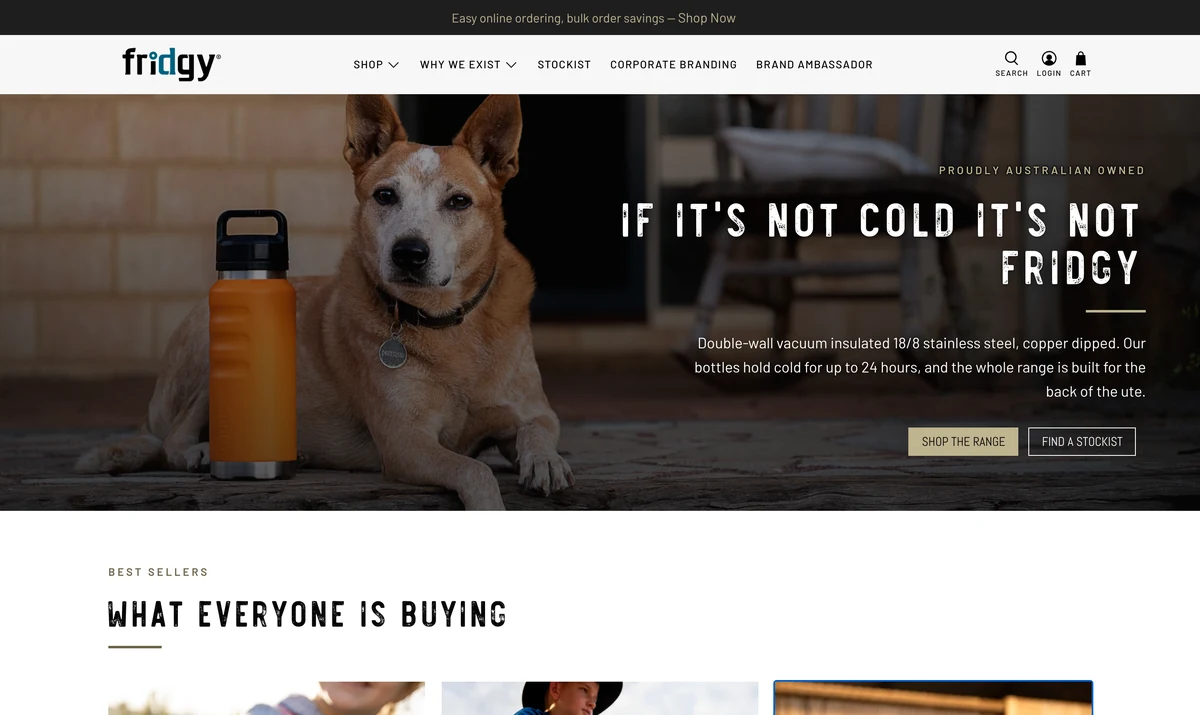
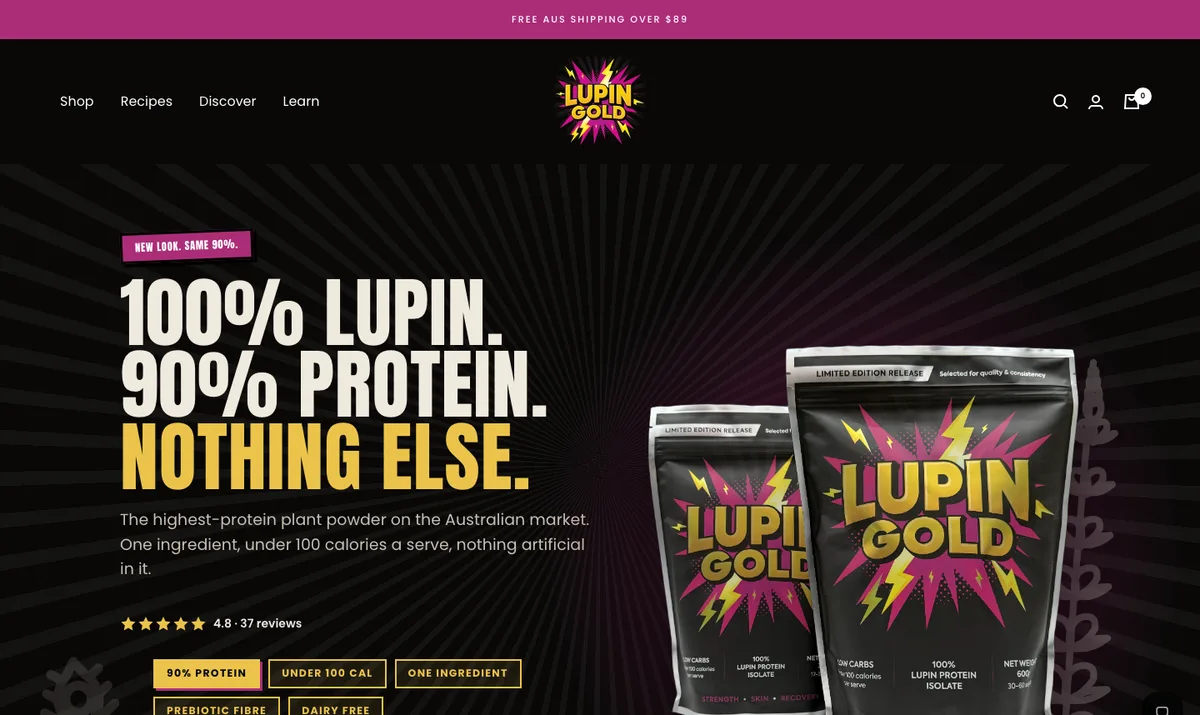
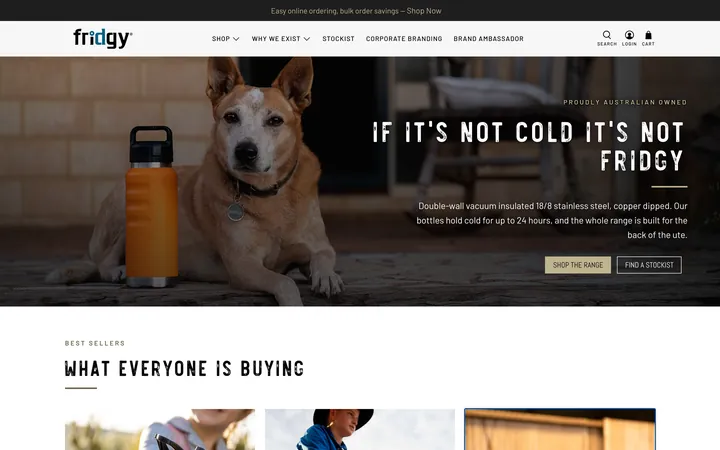
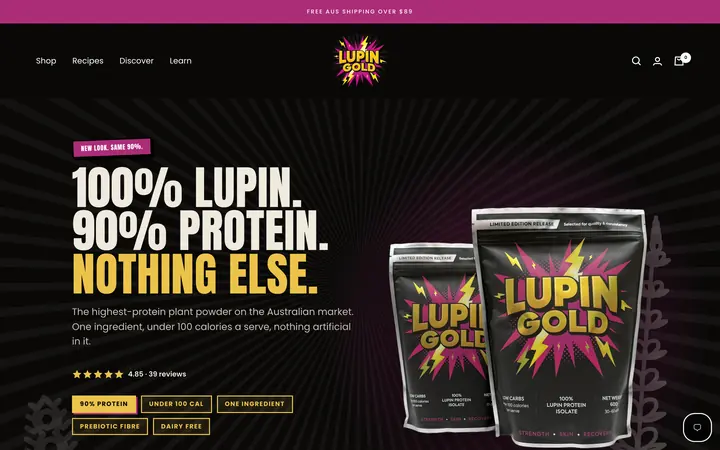
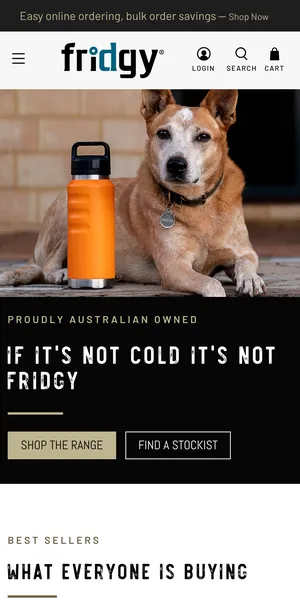
The Fridgy Australia ecommerce store homepage, designed and built by Enkindle Group

Why building on Shopify
matters commercially

Shopify handles the parts you should never be paying a designer to rebuild. Payments, PCI compliance, hosting, checkout, tax, shipping rates and the app ecosystem are solved problems.
That frees your budget for:
+
the way your products are presented
+
the way your brand reads
+
the path from landing to paid
+
sections your team can rearrange, and settings instead of hard coded values
+
a theme that survives an update
+
a price change or a new collection your team makes without coming back to us
Shopify is not the answer for everything. If your site is mostly content and lead generation with a small product range attached, or you already run another platform and it is working,
replatforming for the sake of it is a cost with no return.

Built around the decision,
not the photography.

A buyer landing on a product page has a small number of questions and very little patience. What is it, will it fit or suit me, what does it cost delivered, when will it arrive, and what happens if it is wrong.
That means designing for:
price and variant selection that stay visible while you scroll
shipping and returns stated on the page, not hidden in a footer link
variant images that swap properly, so the colour you selected is the colour you see
long form detail below, in a structure people can skim
specifications, sizing and questions in separate blocks rather than one wall of text
the empty states that are easy to forget: out of stock, low stock and pre order
the product with only one photo, because the supplier never sent more

Cart, mobile checkout and the friction nobody tests

The store you check and the store your customer meets are two different websites, so we design and test:
01
the buying path on real devices, not just a narrow browser window
02
the store as your customer meets it, not as you see it on a desktop monitor
03
one handed use on a patchy connection
04
tap targets sized for thumbs
05
form fields with the right keyboard and autofill, so a WA address is not a chore
06
landing mid funnel from an email or a social ad, not on the homepage

What we actually do on an ecommerce build

Three workstreams, run together. Most stores get the first one built and then stop.
01

The build

Catalogue mapped first, then collections and product templates built in the theme itself rather than stacked on a page builder.
SHOPIFY DEVELOPMENT
02

The search foundations

Collection and product structure built for search from day one, with your existing URLs mapped and redirected before launch.
ECOMMERCE SEO
03

The flows after launch

Welcome, abandoned cart, browse abandonment and post purchase, set up on a store that was built to feed them properly.
EMAIL MARKETING

Speed is a design decision, not an app you install

You cannot buy performance back after the fact. By the time a store is slow, the cause is usually in the design and build choices, so we treat speed as a constraint during design rather than a clean up job at the end.

Build decision
What makes a store slow
What we do instead
Images
oversized hero images
sized and served correctly for the device requesting them
Type
four fonts
a restrained font stack
Above the fold
a carousel on every section
content that renders without waiting on JavaScript
Apps
scripts injected into every page, including the ones they are not used on
audited before they go on, and removed when they stop earning their place
The reason we care is commercial, not academic. Slow pages cost conversions on mobile first, and speed feeds directly into how your product and collection pages perform in search, so it is one of the few build decisions that pays you twice.
Is your store's problem the design, or the traffic you are sending to it?

We build the site, then we run the SEO and email on it

A build can end at the final milestone, with the invoice sent and nobody left looking at the thing afterwards. Six months later:

+
the collection pages have never ranked
+
the abandoned cart flow was never turned on
+
nobody has opened Search Console once

We work the other way, because we are the ones who do that work anyway.

One team on the build, the search and the email
Fridgy Australia is one of the ecommerce clients we work with across the store and the marketing on it, and that combination is deliberate. When the build, the search work and the email all sit with one team, nothing gets blamed on the other party.

What an ecommerce build can include

Depending on your catalogue and where your store is now, a build can include:
catalogue mapping before any design work starts
a product page template that holds up across your whole range
shipping, returns, about and contact pages written and designed
product copy written rather than dropped in from supplier descriptions

Who this is for

This is suited to online retailers that need:
01
a store built around what they sell, not around a template
02
product pages that answer price, fit, delivery and returns
03
a buying path that holds up on a phone
04
a store their own team can edit without breaking the layout
05
rankings protected through a rebuild or a migration
06
the search and email work run on the store after launch
Questions

Ecommerce build questions Perth retailers ask.

How long will my ecommerce site take to build?+
It depends almost entirely on your catalogue and your content. A focused store with a tight product range and photography ready to go moves quickly. A large catalogue with variants, bundles and product copy still to be written takes longer, and usually the content is the bottleneck rather than the build. We will give you a realistic timeline once we have seen your product list, and we will tell you which parts sit with you so nothing stalls halfway through.
Do I have to move to Shopify, or can I keep the platform I am already on?+
We build most stores on Shopify because it removes the expensive, risky parts of ecommerce, but we are not going to move you for the sake of it.
Your current platform
What we do
Working, and your problem is design and conversion rather than infrastructure
We improve what you have
Genuinely holding you back
We say that plainly and explain what a migration involves before you commit to one
Will I lose my Google rankings when my new store goes live?+
Protecting your rankings through the move is part of the job, and that part sits with us. The risk comes from:
+
changed URLs with no redirects
+
product pages that quietly disappear
+
technical settings that get lost in the move
We map your existing URLs before launch, redirect anything that changes, keep your indexable pages intact and watch search performance closely afterwards. Because we run the search work ourselves, we are the ones who have to live with a botched migration.
Is my product copy written for me, or do I need to supply it?+
We can write it, and it is usually part of the build. Product copy is not filler, it is the part of the page that answers the objection stopping the sale, so we would rather write it than drop your supplier descriptions into a template. What we do need from you is the raw detail:
+
specifications
+
sizing
+
materials
+
what makes the product different
+
anything customers regularly ask before they buy
How much should I expect to pay for an ecommerce build in Perth?+
Builds are quoted to scope, because catalogue size and complexity change the job completely. We will look at your product range and your current site before we put a number on anything.
How much does the search work cost after the build?+
If you want us running your search work afterwards, that starts from $1,000 including GST per four week cycle, quoted to scope, and we bill every four weeks rather than monthly.
Why should I use Enkindle for ecommerce web design in Perth rather than a bigger agency?+
Because you deal directly with the person doing the work. The same person designing your product page is the one running your search and email work afterwards, so nothing gets handed between departments and lost. We are founder-led, in Perth, we take on the work we can genuinely do well, and we will tell you when something is not worth spending money on.

Related
growth areas

A store that converts is worth building traffic to. The two decisions belong together.

These are the areas e-commerce builds are usually paired with.

Tell us about your online store

Send us your store URL and what is holding sales back. We will come back with specifics on the build, not a generic pitch. If you would rather talk it through, call us.

Call 0455 089 036
We reply to every enquiry ourselves. No call centre, no automated sequence.
Thank you! Your submission has been received!
Oops! Something went wrong while submitting the form.
Want to know why your store gets the visitors but not the orders?
Enkindle Group logo
Enkindle Group
2026